Children love stories that bring animals, adventure, surprise, and laughter together on the same page. A zoo children’s book does this naturally because the setting already feels exciting. Children know that a zoo is full of lions, elephants, monkeys, giraffes, bunnies, frogs, and unexpected sounds. But when a story adds imagination, humor, and a little bit of mystery, the zoo becomes more than a place to visit. It becomes a doorway into a world where anything can happen.
That is why children’s zoo books continue to be such a strong choice for young readers, parents, teachers, and librarians across the United States. These books give children familiar animals while also encouraging curiosity, observation, vocabulary growth, and creative thinking. A child may begin reading because they love animals, but they often keep turning pages because they want to know what strange, funny, or surprising thing will happen next.
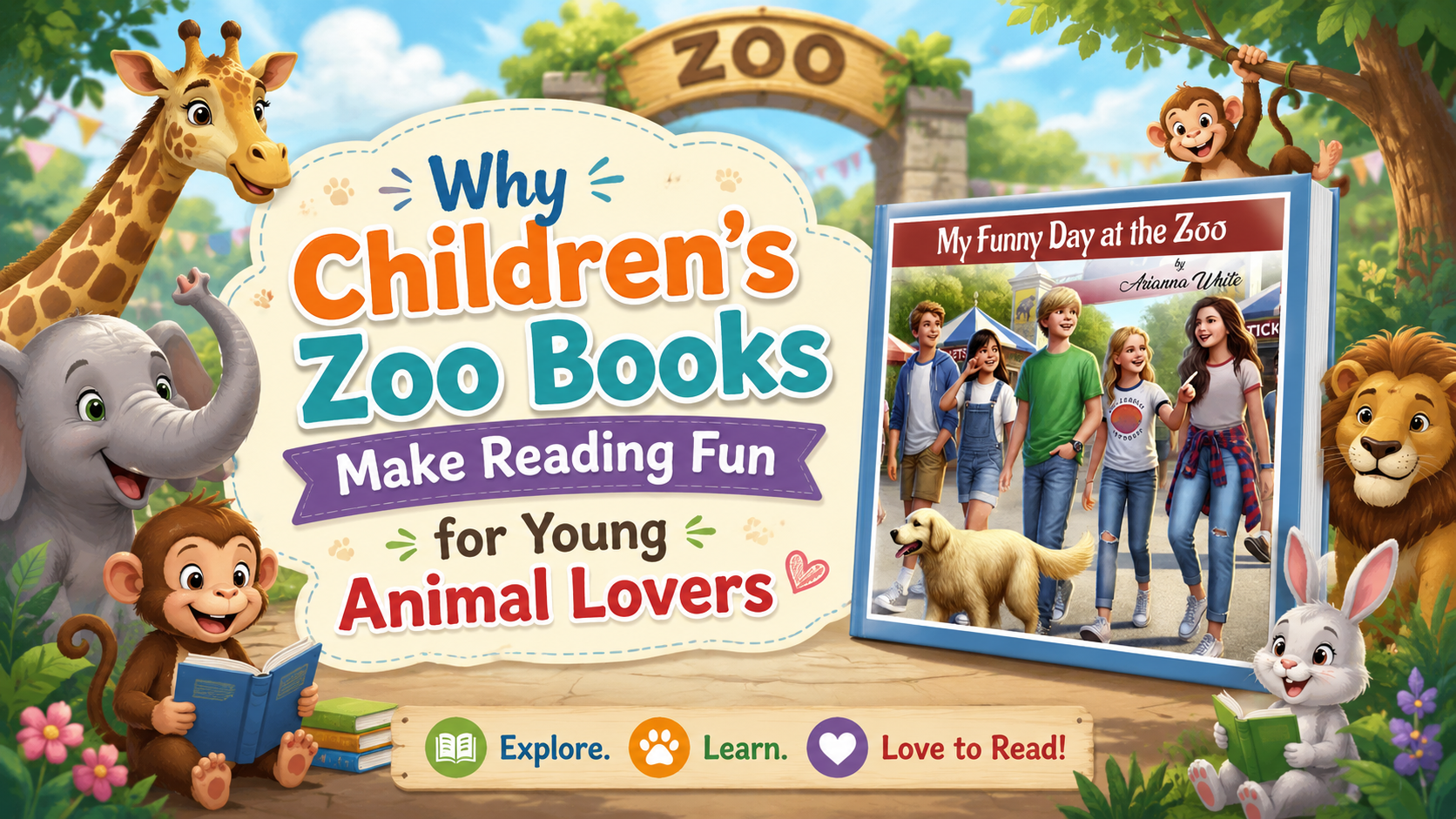
Arianna White’s My Funny Day at the Zoo uses that exact kind of playful energy. The story begins with a child walking through town, meeting friends Charley, Sally, Wendy, and Stu, and heading to the zoo, where Wendy’s dog Mary-Lou joins the adventure. Soon, the animals begin acting in wonderfully unusual ways, turning an ordinary zoo visit into a funny animal mystery. The author’s website also presents the book as a story about a girl and four friends discovering that the zoo animals are behaving unusually and trying to fix what is happening. (Arianna White)
The Magic of Zoo Adventures in Children’s Stories
Zoo settings work beautifully in children’s stories because they offer instant recognition. Even young children who have never visited a large zoo often know what elephants, tigers, monkeys, rabbits, frogs, lions, hippos, and giraffes look like. This gives them an easy entry point into the story. They are not struggling to understand the world of the book. Instead, they can focus on the adventure.
A zoo also gives a writer room to move quickly from one scene to another. One page might feature a giraffe, the next an elephant, and the next a gorilla or beaver. That variety keeps young readers visually and emotionally engaged. In children’s zoo books, the setting itself becomes part of the excitement because every animal area offers a new possibility.
For parents and teachers, zoo stories are especially useful because they support both entertainment and learning. A zoo children’s book can introduce animal names, habitats, movement words, sounds, colors, emotions, and problem-solving. Children can talk about what animals usually do, then compare that with what the animals do in the story. This helps build comprehension in a way that feels natural instead of forced.
In My Funny Day at the Zoo, the familiar zoo setting quickly becomes silly and surprising. The children notice that something is wrong: bunnies are growling, a frog is growling too, tigers are jumping all over the place, and a giraffe has mud on her face. This works because children already have expectations about these animals. When the animals act differently, the humor lands immediately.
When Animals Act in Funny and Unexpected Ways
Humor is one of the strongest tools in children’s literature. Young readers love stories that make them laugh, especially when the joke is easy to picture. Funny animal behavior works well because it flips the ordinary world upside down. A child knows a gorilla does not usually fly, a beaver does not usually tap dance, and elephants do not usually swing from tree to tree. That gap between what is expected and what happens creates delight.
In children’s zoo books, this kind of humor keeps attention high. A reluctant reader may not be motivated by a long explanation, but a flying gorilla or a tap-dancing beaver can pull them right back into the story. Silly scenes also help children predict, react, and ask questions. They may wonder, “Why is that happening?” or “What will the next animal do?” Those questions are signs of active reading.
My Funny Day at the Zoo uses this playful surprise throughout the story. The elephants swing from tree to tree, monkeys make honey, gorillas fly, lions eat yellow bananas, hippos relax in cabanas, and a beaver tap dances. These images are funny because they are unexpected, but they are also clear enough for children to imagine right away.
This style is also effective for read-aloud moments. Parents can pause after each strange animal behavior and let children laugh, guess, or repeat the rhyme. Teachers can ask students to name which animal behavior was the silliest, then invite them to create their own funny zoo animal scene. That kind of interaction turns a simple story into a literacy-building activity.
Friendship and Teamwork in a Zoo Children’s Book
A strong zoo children’s book is not only about animals. It is also about how the characters respond to what happens around them. Children connect with stories when they see friendship, teamwork, courage, curiosity, and shared problem-solving. A group of friends gives young readers multiple characters to follow and helps them understand that challenges can be handled together.
In My Funny Day at the Zoo, the children do not simply watch the animals behave strangely. They notice the problem, talk to each other, and decide something must be done. Stu says they need to stop the strange condition from spreading, and the group follows him into a building that looks like a tree. This gives the story a sense of movement and teamwork.
That matters for young readers because children’s books often shape early social understanding. A story about friends working together teaches that problems are less scary when people cooperate. It also gives children a model for observation: the characters see something unusual, think about it, and take action.
The antidote scene adds another layer of teamwork and imagination. The children find a strange list of ingredients, including a fishing rod, a clown nose, six hair bows, garden clippers, stuffed dolphin flippers, blue dye, and cherry pie. The ingredients are silly, but the structure is purposeful. Children follow the sequence, remember details, and anticipate the result. That is good storytelling and good early literacy practice.
Why Imaginative Zoo Stories Encourage Reading
Children are more likely to enjoy reading when the experience feels playful. Rhymes, rhythm, repetition, silly scenes, and visual surprises help make books feel less like a task and more like an adventure. This is especially important for early readers who are still building confidence. A fun story gives them a reason to keep going.
Rhyming zoo stories can also help children hear language patterns. Words like zoo, Stu, Mary-Lou, odd, frog, place, face, tree, honey, seeing, and leaving create sound connections that support phonemic awareness. Children may not know the technical term, but they feel the music of the language. That rhythm makes the story easier to remember and more enjoyable to read aloud.
Imaginative children’s zoo books also help build emotional engagement. When a child sees animals acting strangely, they are not just learning animal names. They are experiencing surprise, curiosity, concern, relief, and joy. In My Funny Day at the Zoo, the magical snow antidote heals the animals after the children throw it into the air, turning the problem into a joyful resolution.
For parents in the United States looking for screen-free family reading, a zoo children’s book can be a practical choice because it offers easy conversation starters. After reading, adults can ask: Which animal was the funniest? What would you do if you saw a flying gorilla? What ingredient would you add to a silly antidote? These questions strengthen comprehension without making reading feel like homework.
For teachers and librarians, books like this can fit into animal units, imagination-themed lessons, rhyme activities, story sequencing, and creative writing prompts. Children can draw their own wacky zoo animal, write a four-line rhyme, or work in groups to invent a new zoo adventure. A good children’s zoo book does not end when the final page is turned. It gives children something to talk about, imagine, and create.
Conclusion
Children’s zoo books remain popular because they combine the best parts of early reading: recognizable animals, colorful settings, humor, friendship, rhythm, and surprise. They help children laugh while they learn, imagine while they read, and connect with stories through characters who feel curious and brave.
My Funny Day at the Zoo by Arianna White fits naturally into this tradition. With flying gorillas, swinging elephants, honey-making monkeys, a tap-dancing beaver, a magical antidote, and a group of friends working together, it offers young readers a lively zoo adventure full of laughter and imagination. For children who love animals, silly surprises, and stories that move with energy from page to page, this zoo children’s book is a fun and memorable reading choice.