Introduction
The most memorable children’s books are often the ones that feel simple, playful, and easy to read aloud. They do not need complicated plots or heavy lessons to make an impact. Instead, they create joy through rhythm, imagination, surprise, and characters children can follow from the first page to the last.
That is why many classic children’s books continue to matter across generations. They invite young readers into a world that feels safe but exciting. A normal walk, a trip with friends, or a visit to the zoo can become the start of something unexpected. For parents, teachers, and caregivers across the United States, these books also serve a practical purpose: they help children build listening skills, vocabulary, memory, confidence, and a positive relationship with reading.
A strong children’s book does more than entertain for a few minutes. It gives children a reason to laugh, repeat lines, ask questions, notice pictures, and request the same story again. That repeated experience is often where early literacy begins.
Simple Stories with Big Imagination
Classic children’s books often work because the story is easy to understand. Young readers need a clear path. They want to know who is in the story, where the characters are going, and what problem they face. Once that foundation is simple, imagination can take over.
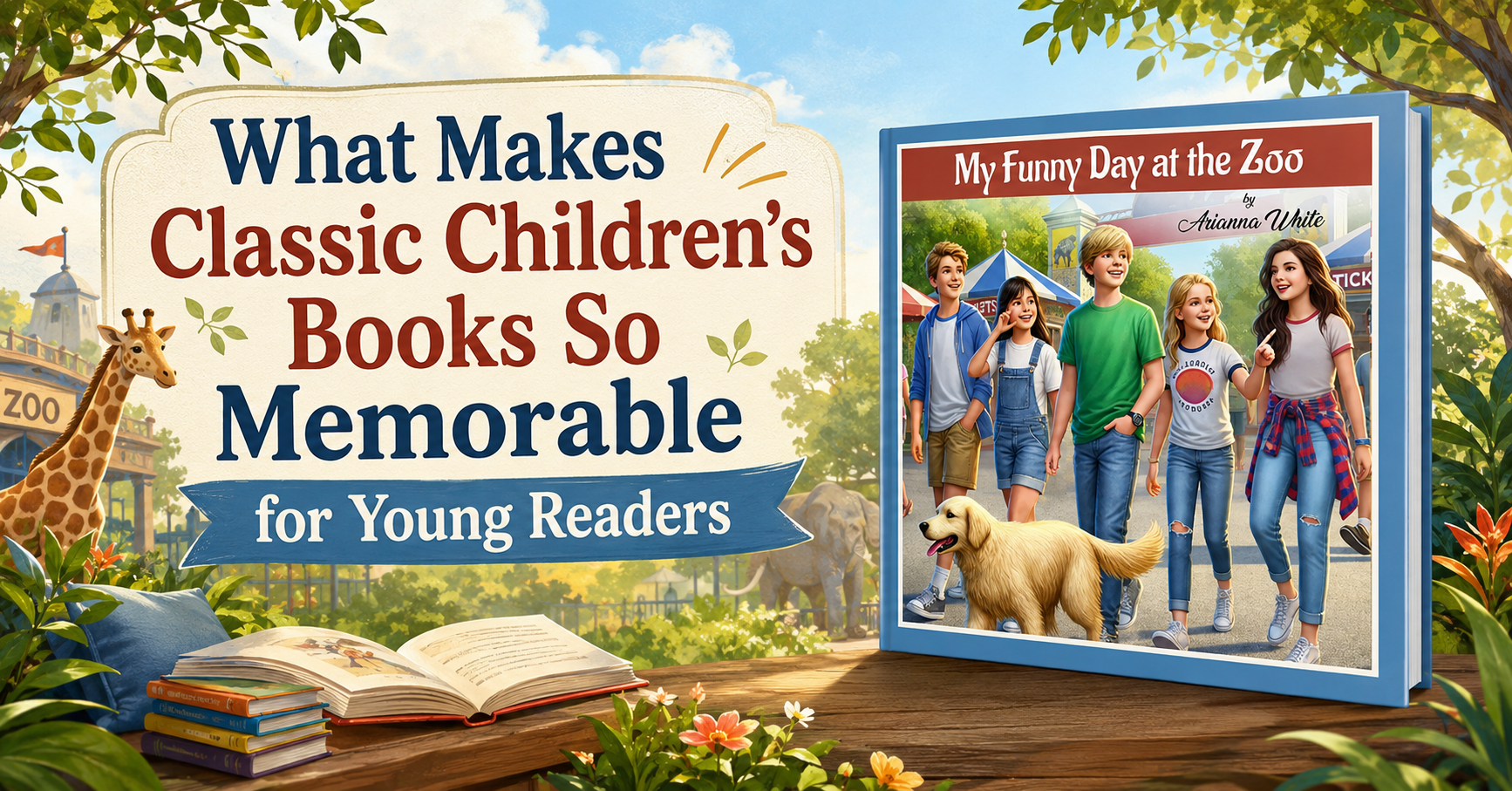
A familiar setting is especially powerful. A town, a park, a bedroom, a school, or a zoo gives children something they already recognize. From there, the author can add surprise. In My Funny Day at the Zoo, the story begins with a child wondering what to do, meeting friends named Charley, Sally, Wendy, and Stu, and heading to the zoo, where they also see Wendy’s dog, Mary-Lou. That opening is direct and child-friendly. It gives readers people to follow, a place to imagine, and a reason to keep reading.
The imaginative twist comes when the zoo is not behaving like an ordinary zoo. Animals begin doing things children do not expect. This kind of storytelling is effective because it respects how young minds work. Children understand the real world, but they also love asking, “What if?” What if animals acted silly? What if a zoo became strange? What if the children had to solve the problem themselves?
That balance between familiar and surprising is one reason children’s books become memorable. The story gives children enough structure to feel secure, then adds enough imagination to make the experience exciting.
The Power of Rhyme and Repetition
Rhyme is one of the strongest tools in children’s books because it makes reading feel musical. Before children can read independently, they can hear patterns. They notice sounds, repeated endings, and predictable rhythms. This helps them remember words and anticipate what might come next.
For parents and teachers, rhyme also makes a book easier to read aloud. A rhythmic story naturally supports voice, pacing, expression, and participation. Children may repeat favorite lines, finish rhyming words, or laugh when the rhyme leads to a funny image. These moments are not just entertaining; they help build phonemic awareness, which is an important early reading skill.
Repetition works in a similar way. When a story repeats a pattern, young readers feel included. They begin to understand how the book moves. This sense of participation turns reading from a passive activity into an interactive one.
Many classic children’s books use short scenes, simple phrasing, and memorable sound patterns because children learn through repeated exposure. A book that is fun to say out loud is more likely to be read again. The more often children hear language in a joyful setting, the more natural reading begins to feel.
In My Funny Day at the Zoo, the rhyming structure supports the playful tone. The story moves quickly from one unusual event to the next, giving young readers a steady rhythm as the zoo becomes sillier and more surprising.
Characters Children Can Follow and Enjoy
Children connect with stories when the characters feel familiar. That does not mean every character must be realistic. It means young readers need someone they can follow emotionally. Friends, siblings, pets, teachers, animals, and curious children all give young readers an easy way into the story.
A group of friends can be especially effective because it creates energy. Children understand friendship, teamwork, surprise, and shared adventure. When characters react together, young readers can imagine themselves as part of the group.
Pets also add warmth. A dog, cat, or other animal companion can make a story feel more personal and inviting. In My Funny Day at the Zoo, Mary-Lou is not just a background detail. When the strange animal behavior begins to spread, Mary-Lou starts to twirl, raising the stakes in a way children can understand. The problem becomes closer to the main characters, which helps young readers care about what happens next.
Strong children’s books often use characters as emotional anchors. Even when the story becomes silly, magical, or exaggerated, the characters help children stay connected. They give the adventure a human center.
This is one reason classic children’s books remain useful in homes and classrooms. Children are not only learning words; they are learning how stories work. They see characters notice a problem, react, make choices, and move toward a solution.
Humor That Keeps Children Turning Pages
Humor is one of the most important reasons children ask for the same book again and again. Funny stories make reading feel rewarding. They reduce pressure, invite laughter, and help children associate books with happiness.
In children’s literature, humor often comes from surprise. Animals act like people. Everyday objects become part of a strange solution. A normal place suddenly becomes ridiculous. These moments work because children enjoy the gap between what they expect and what actually happens.
My Funny Day at the Zoo uses this kind of humor throughout the story. The gorillas fly, lions eat yellow bananas, and hippos relax in cabanas. Later, the children realize the animals have “wacky animal fever,” and the zoo even has a tap-dancing beaver. These images are memorable because they are easy to picture and fun to repeat.
Funny scenes also encourage visual thinking. A child may pause to imagine an elephant swinging from a tree or a beaver tap dancing. That mental picture helps the story stay in memory. For early readers, this matters. Imagination strengthens comprehension because children are not only hearing words; they are building scenes in their minds.
Humor also gives adults a reason to enjoy the reading experience. A good read-aloud book should not feel like a chore. When parents and teachers enjoy the rhythm and comedy, children feel that enthusiasm. The shared laughter becomes part of the reading memory.
Conclusion
Classic children’s books become memorable because they understand what young readers need: simple storytelling, strong rhythm, familiar characters, playful imagination, and humor that feels fresh every time the book is opened. They create a reading experience children can enjoy before they fully understand every word on the page.
That is also what makes My Funny Day at the Zoo fit naturally within the tradition of joyful children’s books. It brings together friends, animals, adventure, rhyme, silly surprises, and a playful problem that children can follow from beginning to end. From flying gorillas and banana-eating lions to a magical solution that helps restore the zoo, the story gives young readers the kind of imaginative fun that makes them want to return to the book again.